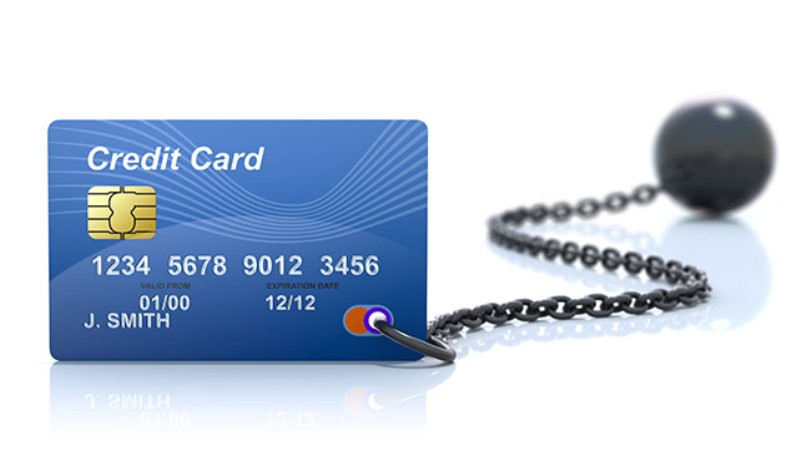
Credit card debt has a frustrating habit of hanging around much longer than expected. You make a payment every month, yet the balance sometimes seems barely different because interest keeps eating into your progress.
The good news is that you do not have to stop enjoying life completely to tackle credit card debt. The smarter approach is to understand where your money is going, reduce expensive interest where possible, and redirect manageable amounts of everyday spending toward your balance. Small changes can become surprisingly powerful when repeated consistently.
Start by Finding Out What Your Debt Really Costs
Before cutting expenses, look carefully at your credit card statements.
Write down your current balance, APR, minimum payment, monthly interest charges, and due date for every card. Seeing these figures together often makes the situation much clearer.
For example, imagine carrying a $3,000 balance at a relatively high APR. A noticeable part of every monthly payment may go toward interest instead of reducing the principal.
Many issuers calculate credit card interest daily based on the account balance. This means reducing your balance sooner can reduce the amount of interest that accumulates later.
Look at the interest charge on your latest statement and multiply it roughly by 12. The result will not be exact because balances change, but it gives you an idea of how much money could disappear into borrowing costs over a year.
That number can become powerful motivation.
Stop Relying Only on the Minimum Payment
Paying the required minimum protects your account from being immediately considered unpaid, but it is rarely the fastest route out of debt.
Credit card statements in the United States are required to show how long repayment could take if you make only minimum payments and stop adding new purchases. CFPB guidance warns that minimum-only repayment can take years and generate significantly more interest.
Suppose your required minimum is $75.
Instead of automatically paying $75, you might decide that $125 is your personal minimum. That additional $50 goes toward reducing your balance faster, which can also reduce future interest.
Even an extra $20 or $30 matters.
The trick is making the larger payment part of your regular budget rather than something you do only when you happen to have spare cash.
Consider Whether a Balance Transfer Makes Sense
A balance transfer can sometimes make repayment easier by moving expensive credit card debt to another card offering a temporary low or 0% promotional APR.
For example, imagine moving a $4,000 balance from a high-interest card to one offering 0% interest for a promotional period.
If you paid $400 every month and avoided new purchases, you could direct practically the entire payment toward the transferred debt during the promotional period rather than losing part of it to interest.
However, balance transfers are not free money.
Many offers charge a transfer fee, commonly around 3% to 5% of the amount moved. You also need to check the promotional period, regular APR after the offer ends, transfer deadline, and eligibility requirements.
For a $5,000 transfer with a 3% fee, for example, the upfront cost would be $150.
You should therefore compare that fee against the interest you expect to save.
Most importantly, avoid using the new card as additional spending capacity. Moving $5,000 of debt and then creating another $3,000 balance defeats the entire purpose.
Ask Your Card Issuer for Help
You may have more negotiating room than you think.
If your interest rate is making repayment difficult, call your credit card company. Explain your financial circumstances calmly and ask whether the issuer offers a lower APR, hardship arrangement, reduced payment, or another assistance program.
There is no guarantee the answer will be yes.
However, CFPB guidance recommends contacting your card company immediately when you are struggling with payments. Some issuers may be willing to adjust payment arrangements for customers experiencing financial difficulties.
Before calling, know exactly what you can afford.
You might say that you are currently paying $180 per month but need a temporary arrangement closer to $120 for several months.
Be specific rather than simply saying, “I can’t pay.”
And if the first representative cannot help, politely ask whether there is a hardship or account-assistance department.
The conversation might feel awkwrd, but avoiding the problem usually gives you fewer options rather than more.
Cut Spending Without Cutting Out Your Entire Life
Many debt plans fail because they are too extreme.
Someone decides to spend absolutely nothing on restaurants, entertainment, hobbies, shopping, or social activities for an entire year. After three miserable weeks, the plan collapses and spending returns to normal.
A more realistic approach is substitution rather than total elimination.
If your family spends $50 every Friday ordering dinner, consider cooking at home three Fridays each month and keeping one restaurant night.
If you normally spend $150 on clothing, try lowering the budget to $75 rather than banning shopping completely.
You could also replace some paid entertainment with cheaper alternatives such as:
- Local parks or hiking
- Free community events
- Movie nights at home
- Libraries and free exhibitions
- Picnics instead of restaurant lunches
What matters is what happens to the savings.
If you save $60 by changing your weekend plans and then casually spend the $60 elsewhere, your debt has not improved.
Transfer the savings toward your credit card as soon as possible.
Make Impulse Spending More Difficult
Credit cards make purchasing almost frictionless.
A few taps on your phone and the money is gone.
Creating a small barrier between wanting something and buying it can dramatically reduce unnecessary purchases.
Try a 24-hour rule for nonessential items. If you see something you want, wait until the next day before purchasing it.
For larger purchases, make the waiting period 72 hours.
You may be surprised how often the urge disappears.
Another simple technique is removing stored credit card details from online stores. Having to physically get your wallet and enter the card number creates just enough inconvenience to reconsider a purchase.
Some people also find a weekly cash allowance helpful for discretionary spending.
Once the week’s cash is gone, recreational spending stops until the next budget period.
It sounds old-fashioned, but increasing the “friction” of spending can make impulse purchases less frequent.
Choose a Debt Payoff Strategy You Can Stick With
If you have several credit cards, decide which balance gets your extra money.
Two popular approaches are the debt avalanche and debt snowball.
Debt Avalanche
With the avalanche method, you make minimum payments on all accounts and send extra money toward the card with the highest interest rate.
Mathematically, this can help minimize interest expense.
Debt Snowball
With the snowball method, you target the smallest balance first while maintaining required payments on the others.
Once the smallest debt disappears, its payment is redirected to the next balance.
The snowball may not always produce the lowest possible interest cost, but some people find the quick wins more motivating.
Either system can work better than randomly distributing extra payments without a plan.
Choose the method that you are most likely to follow consistantly.
Protect Your Progress by Avoiding New Debt
Paying down $500 while adding $450 of new charges is frustratingly close to running in place.
Once you have chosen a repayment strategy, consider separating cards used for everyday spending from cards carrying existing debt.
Ideally, stop adding purchases to the cards you are actively paying down.
If you use another credit card for normal expenses, try to pay its statement balance in full by the due date when your finances allow it. Cards with a grace period generally allow consumers to avoid purchase interest when the applicable balance is paid in full according to the issuer’s terms.
Payment history also remains important to your credit profile. FICO identifies payment history as its largest broad scoring category, representing about 35% of a typical score calculation, although the actual impact varies by consumer.
Automatic minimum payments can help prevent an accidental missed due date.
Just remember that autopay should be your safety net, not your entire payoff strategy.
Turn Small Savings Into Extra Payments
You do not necessarily need one dramatic lifestyle change to make progress.
Look for several smaller reductions.
Maybe you save:
$25 from canceled subscriptions.
$40 from eating at home.
$30 from cheaper entertainment.
$25 from reducing impulse shopping.
That is $120 per month.
Instead of allowing those savings to quietly disappear into your checking account, make an extra credit card payment.
Over a year, that represents $1,440 of additional payments before considering the interest savings created by reducing your balance sooner.
The CFPB notes that because many credit card issuers calculate interest daily, paying down some or all of a balance earlier can reduce the interest you ultimately pay.
This is where seemingly boring savings become surprisingly efective.
You do not need to eliminate every enjoyable expense to tackle credit card debt successfully. Understand your interest costs, pay more than the minimum, investigate lower-rate options, and redirect realistic savings toward your balances. Most importantly, avoid creating new debt while repaying the old.
Start with one change this week, automate what you can, and build momentum until your balance finally reaches zero.